
Chapter 1: The Fall (Round 1)
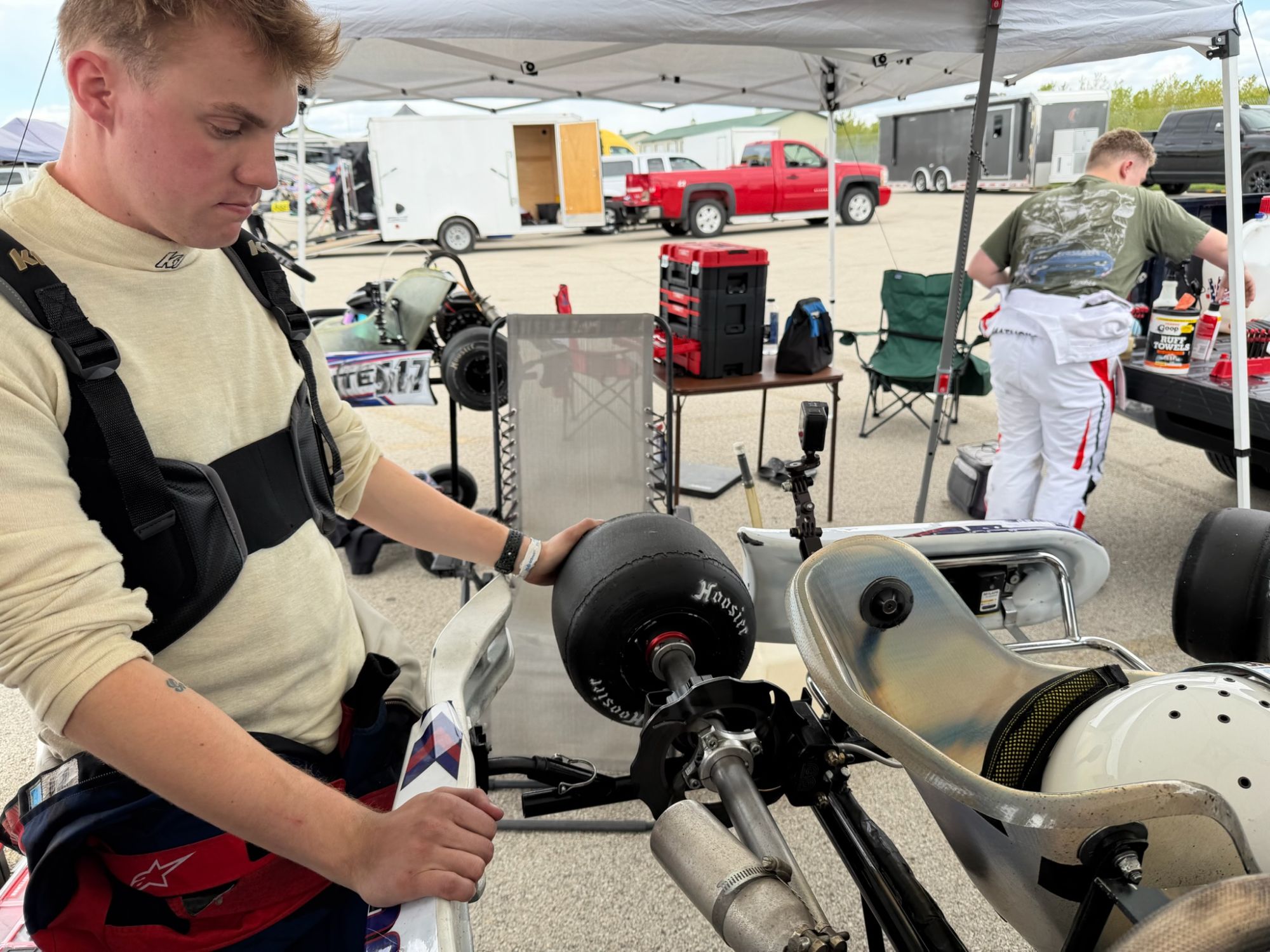
Going into this weekend, this was my first race of the 2026 season. I'd had one test day beforehand, and it didn't go well — a tire popped off, and I felt genuinely off the pace even after a new front end upgrade, two rebuilt engines, and a brand new set of tires for the season. So going into Round 1, I wasn't as confident as I should have been. Every driver on that grid had beaten me the year before, but I chalked that up to a lack of knowledge, not talent. Over the winter I'd spent a lot of hours at coffee shops and at my college's engineering department, working with real race teams and people who specialize in setup, trying to bridge that gap. I've always been a good driver on talent alone — I just never had the knowledge to build a race-winning kart.
Race day, I felt a problem from the start. The kart was loose, and I was severely off the pace — about half a second off the ace and a full second a lap off the leader. I spent qualifying stressed out trying to figure out why. Afterward, I pieced it together: I'd used an older axle for this race without realizing it had lost some of its strength, and the bearing hub grub screws weren't holding tight enough. A driver in another class pointed out what was happening — my axle was shifting, and the brake rotor was rubbing against the pad, so my brake was engaging constantly. I'd never dealt with that before. I put axle collars on to fix it, which helped some, but not enough.
Going into the heat race, I thought I'd solved it. I started P5 and worked up to P3 — the first time all day I felt like the problem was fixed. Then the final went sideways. The kart felt slow, and I dropped all the way to P7 of 8 drivers — a rough way to open the season. I was gutted, but relieved I'd found the problem in the first race instead of the last. The race told me I had the pace but was still fighting mechanical demons. Once again, I left a weekend with nothing to show for it. But it was only Round 1. I knew there were five more rounds, and I had a lot left to prove.
May 15 – June 15, 2026Chapter 2: The Long Nights
After that race, I knew things had to change, and they had to change now. I scheduled two test days and brought the kart to my friends at school to sort it out properly. We reworked the scaling, fixed the weight distribution, and rebuilt the front end completely — I'd been fighting a kart that was way too loose. Outside of that, I spent night after night doing the research to get the kart into the shape it needed to be in for the next round, because I knew Round 1 wasn't on me. It was mechanical.
I also picked up a MyChron 6, which let me go over telemetry in real time — I'd been running a MyChron 4 with no real data logging before that. Seeing the numbers on paper made me angry, honestly, because they were a real reflection of the work I'd put in. That anger is what drove the next month.
Chapter 3: The Turnaround (Round 2)
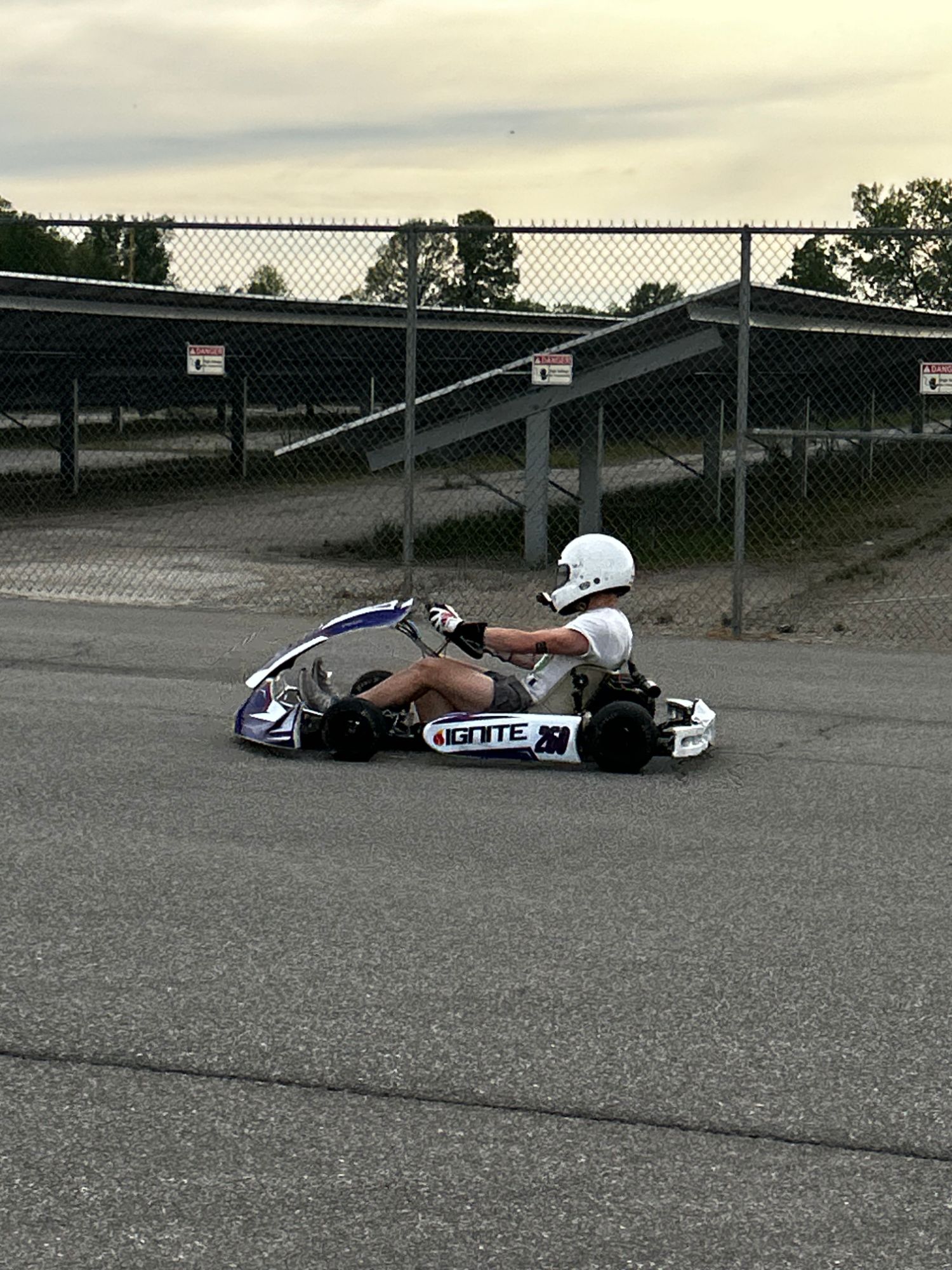
This chapter comes after a strong run at the Ignite Challenge doubleheader at Norway Motorsports Park and Kart Circuit Autobahn, where I finished an amazing P5 in a 30-kart field. But this part of the story is about KCA Challenge.
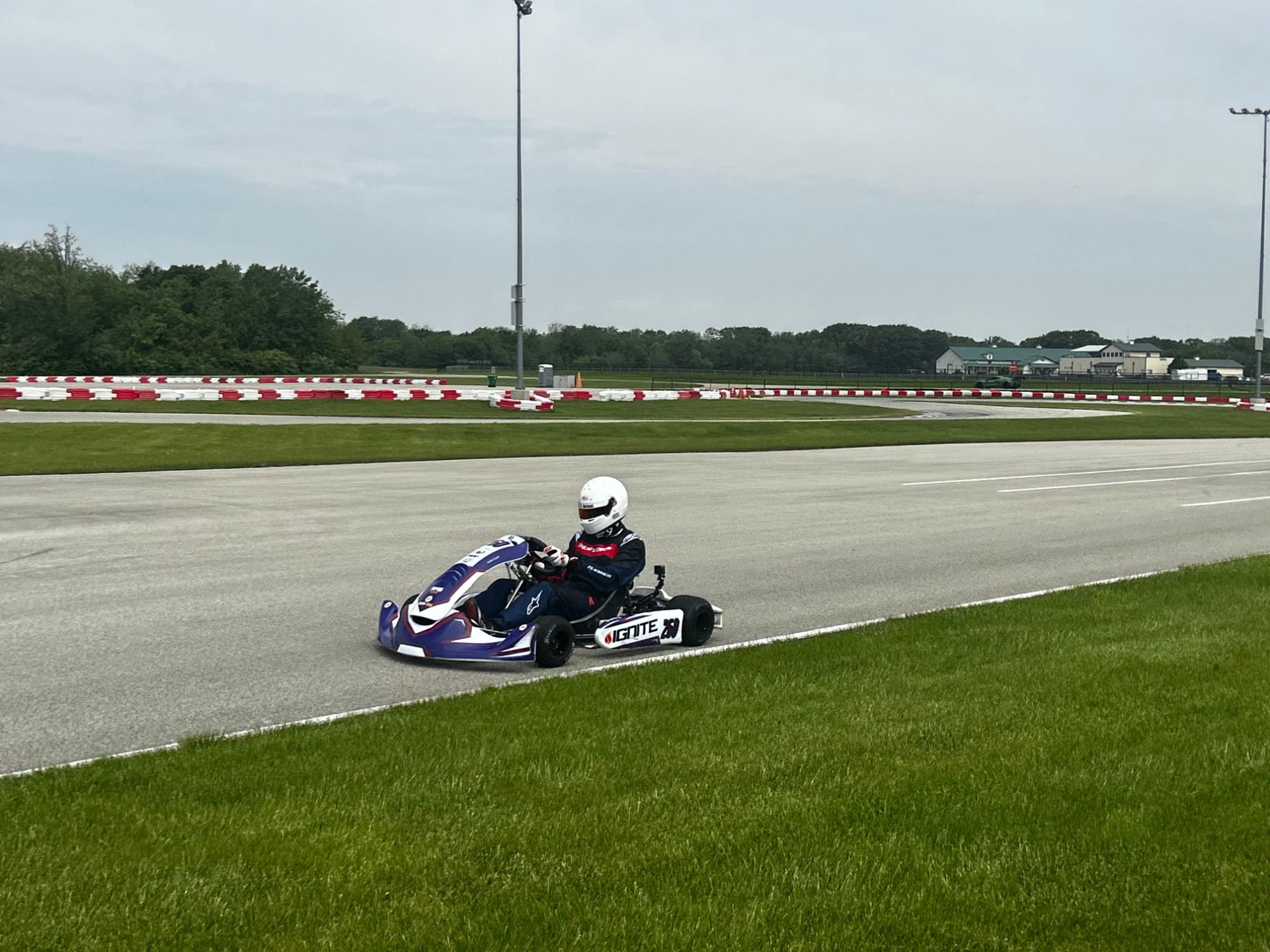
I came into the weekend with real momentum, and it showed. I didn't have the outright pace for P1 that day, but I was in a league of my own for second — I ran P2 comfortably all day, about two tenths a lap faster than P3 and P4. Those were drivers I'd consistently lost to, and now I was beating them by 7.1 seconds by the end of the final. First place was 7.4 seconds ahead of me. It told me I had serious pace, and that I still had work to do to close that last gap.
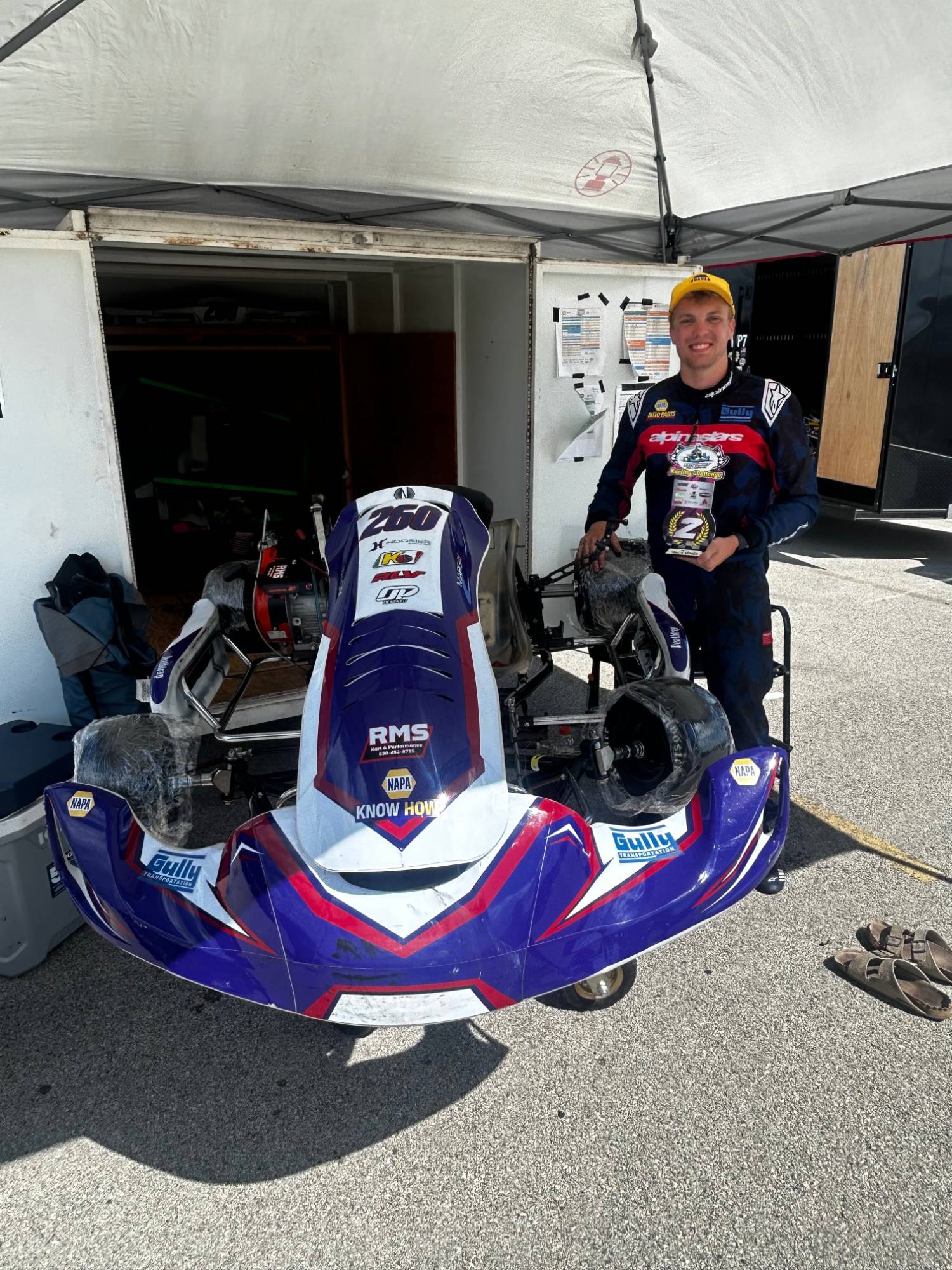
Stepping onto the podium for the first time just felt right. It put me back into championship contention — after Round 1 I was P7 in points; after Round 2, I was second, only a point back.
Chapter 4: The Planned Outcome (Round 3)
This was a good weekend, and I was genuinely happy for it to happen the way it did — my first ever win in Ignite Senior, and my first win ever in owner karting. In a way, I'd predicted it. All the nights spent thinking through gearing, clutch setup, and kart setup as a whole had paid off, and it had only gotten sharper since I started running telemetry and logging more time in the kart. I knew what I wanted from the kart, and I was at a level above my competition.
I'd just come off a rough weekend at Quincy, where I still managed a top-11 start in a field of 38 drivers. My growth into a more complete driver was on full display that Saturday. I led both practice sessions and made the right adjustments all the way through — until a mistake on tire pressures gave me a slow leak in the rear left and dropped me to P2 for the heat race after qualifying. I fixed it after the fact.
The heat race didn't start well either. I dropped to P3 on the opening lap. But I made the right calls under pressure and worked my way back to the line in first — a near three-way drag race to the checkered flag. Even with my back against the wall, I knew I was a different, better driver than I used to be.
The final proved it. I made a few small adjustments beforehand, and it was exactly what the kart needed. I took the lead after Turn 1 on Lap 1 and never looked back, winning by a 7.7-second margin over second place. That result locked in something I'd promised myself I'd get, not even seven months earlier — a promise that, at one point, I genuinely didn't think was possible this year.
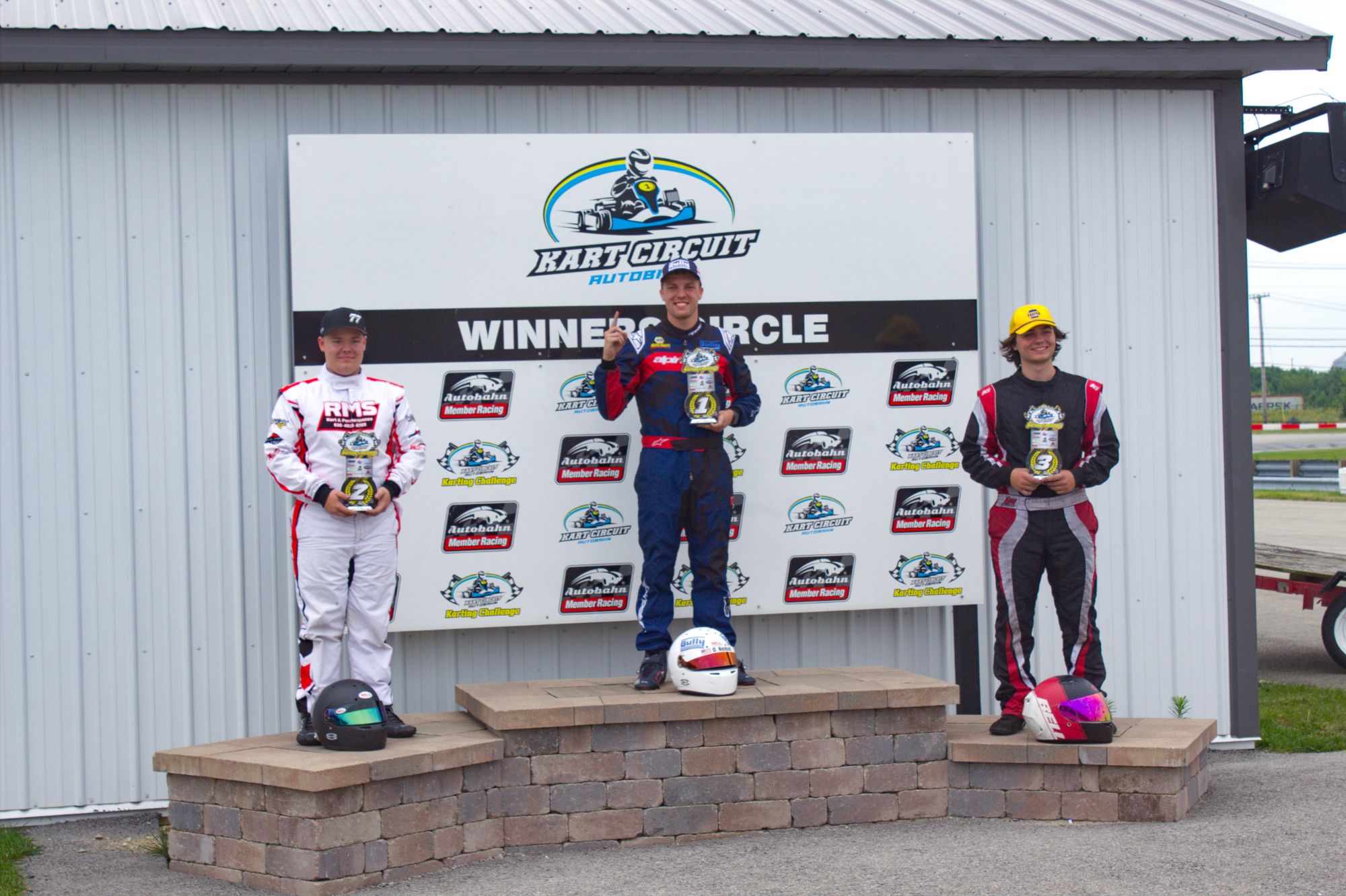
What sticks with me most is this: not even a year ago, these same drivers were beating me every single round. I thought it would take so much more than this to catch them. But I put in the work, and the results showed up.
Three rounds in, I'm leading the championship by 24 points over second place. It's close, and it's still a fight — but for the first time, it's my championship to lose. Thank you to everyone who's supported this journey. There's a lot more still to come.