
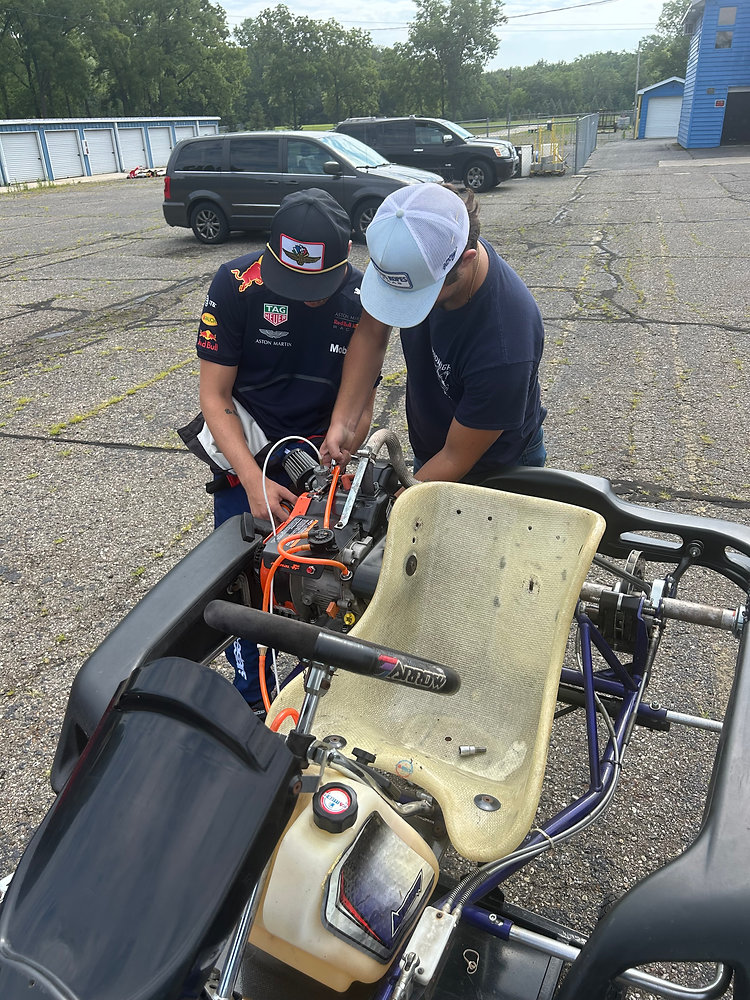
I've been passionate about racing since I was little, but never had the funding or knowledge to get into owner karting as the next steps to motorsports and car racing. As I didn't grow up in a wealthy household or a household that grew up in motorsports. Until I was 18, I finally got the knowledge to and decent financial status to invest in my own go kart.
In recent years, motorsports — especially grassroots racing in the United States — has gotten more and more expensive. Karting has become increasingly costly, and if you want to be successful, the expenses add up quickly. Competitive teams spend multiple days testing and often hire mechanics, which can cost upwards of $15,000 a season — or even more. And that's just for the entry-level engine class, the Briggs LO206. For a new driver like me, or other rookies trying to break into the scene without family backing or deep pockets, it can feel like the deck is stacked from the very beginning.
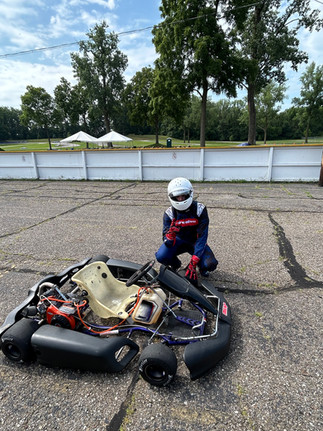
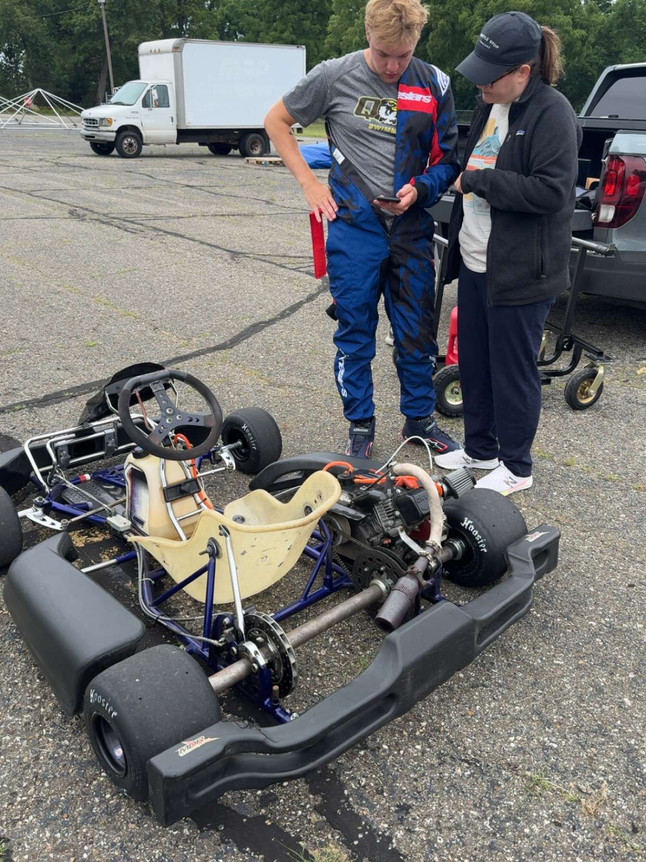
Take tires, for example. Most competitive teams will go through at least four sets of tires per season — that's on the low end. At roughly $1,200 for four sets, the costs pile up fast. Then there are entry fees, which can total around $1,200 for a season. And if you crash and damage your kart, repairing or replacing the chassis could set you back anywhere from $2,000 to $4,000. Factory-based teams have access to better data, equipment, and resources, giving them a significant edge. Privateers like me? We're out here trying to make magic happen with a fraction of the budget.
Another thing would be the mechanical struggles that privateers have to troubleshoot and fix on their own. As I was driving in my first race in Elkhart last year, people would bring campers and multiple karts to a race with some teams with multiple engines that they could change on the fly. While me on the other hand had to figure and innovate with a crappy engine on budget tools. And it showed in performance when it was time to race.
Not to mention travel logistics, the challenges of paying for gas as well and entry fees for races can cost up to $1,000 a season on the low end. Of course everyone trying to get in this sport knows the costs but when trying to make a name for yourself. Sponsorships and branding for most privateers rely on the support of local business as well as their own personal funding to get into the scene.
The odds are stacked against us, but that doesn't mean I — or any other privateer — should give up. Success in racing comes down to more than money. Innovation, perseverance, and consistency can get us noticed. The goal isn't just to race — it's to prove that hard work and determination can overcome even the toughest challenges. And with enough dedication, maybe one day we'll earn a spot on a factory team where we can truly compete at the highest level.